Digital Transaction Systems Accelerating Blends of Video Reels, Live Dealer Tables, and Wagering on Live Events
Zoe Weber · May 27, 2026

Digital Transaction Systems Accelerating Blends of Video Reels, Live Dealer Tables, and Wagering on Live Events
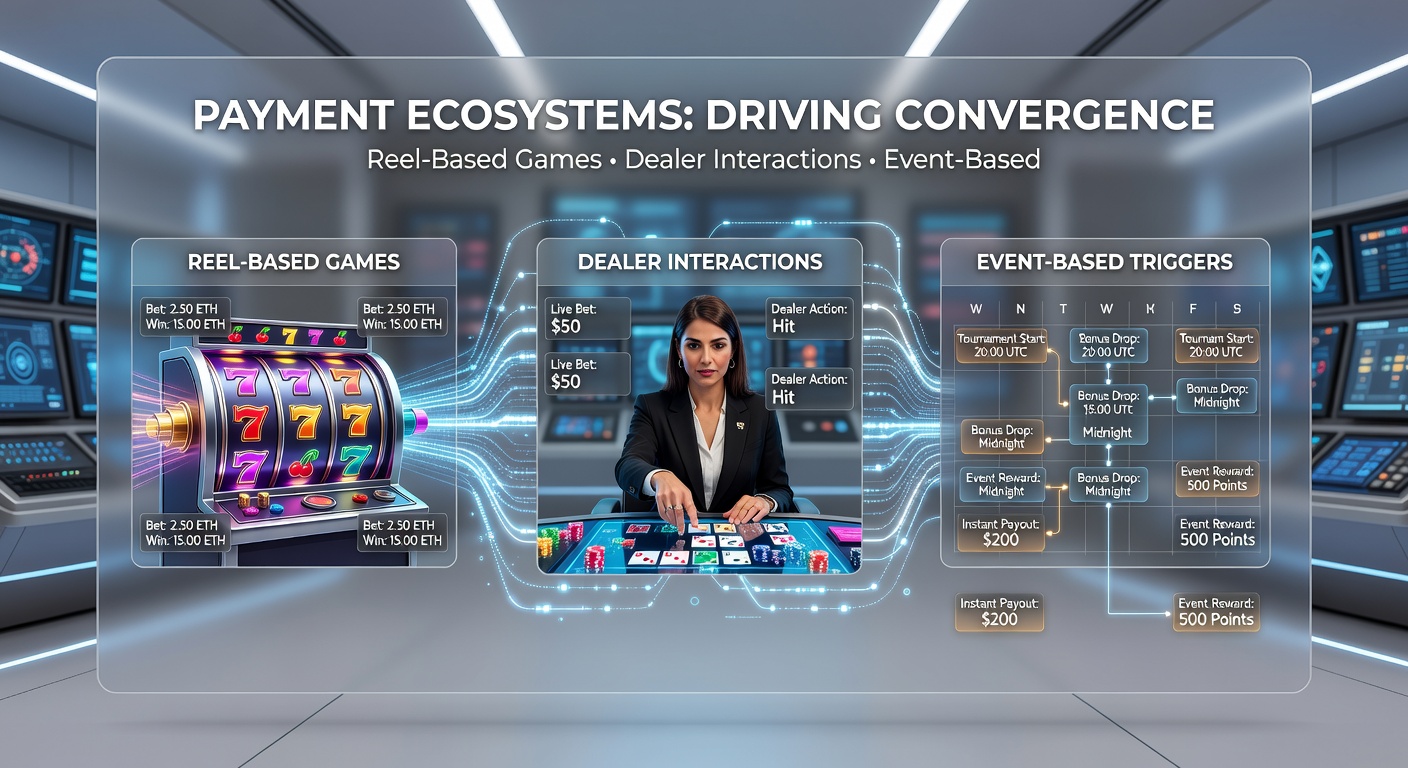
Payment networks now serve as the central infrastructure that links reel-based games, dealer interactions, and event-based wagers within single operator environments; seamless fund movement across these formats relies on integrated ledgers that update balances in real time while supporting multiple regulatory jurisdictions.
Transaction Speed and Cross-Format Access
Operators deploy instant settlement rails that allow balances from a completed slot session to transfer directly into a live dealer lobby or an active sports market without separate authentication steps; this architecture reduces friction because the same digital wallet maintains a unified view of available funds across product verticals. Research from the University of Nevada's gaming studies department shows that platforms with sub-second internal transfers record higher session continuity rates when users switch between reels and tables during the same visit.
Payment service providers have expanded support for stablecoin settlements alongside traditional cards and bank transfers, and these options appear most frequently in markets where operators must reconcile multi-currency player accounts within tight reporting windows. Data compiled by the European Gaming and Betting Association indicates that cross-border operators using multi-rail payment stacks processed 37 percent more inter-product transfers in the first quarter of 2026 compared with the same period two years earlier.
Regulatory Alignment Across Product Lines
Jurisdictions that license combined gaming offerings require operators to demonstrate that payment controls apply uniformly whether funds originate from reel spins, dealer rounds, or event wagers; this uniformity simplifies compliance audits because transaction logs feed into a single monitoring system rather than separate silos. Observers note that Canadian provincial regulators have begun requesting unified payment audit trails from multi-product licensees, and similar expectations have surfaced in several Australian state frameworks during 2026 licensing renewals.
Player Journey Data and Platform Design
Analytics teams examine sequences in which users move capital between game types to refine interface prompts that surface relevant promotions at the moment of transfer; for instance, a player finishing a reel bonus round may receive an immediate offer to apply remaining funds toward an in-play accumulator on a linked sportsbook module. One study released by the Queensland University of Technology's gambling research unit tracked over 2.4 million account sessions and found that 28 percent of users who completed a live dealer round subsequently placed an event wager within the same hour when instant internal transfers were enabled.
Wallet providers have introduced programmable spending limits that apply across all verticals, and these controls help operators meet responsible gambling obligations while still permitting fluid movement between product categories. Figures released by the Interactive Gaming Council reveal that operators adopting cross-product limit engines reported a 19 percent reduction in manual support tickets related to balance queries during the opening months of 2026.
Security Protocols Supporting Convergence
Tokenization standards now cover both gaming and wagering transactions so that card details never reach the operator's core systems regardless of whether the activity involves reel outcomes, dealer decisions, or live event results; encryption layers remain consistent because the same payment gateway handles all three streams. Industry reports from North American payment processors indicate that fraud rates on platforms with unified token vaults fell by an average of 14 percent year-over-year through April 2026.
Multi-factor authentication flows have been streamlined to require only a single verification event per session even when users switch between reels, tables, and sports markets; this design choice maintains security benchmarks while preserving the speed of internal transfers that drive product convergence. Observers at the Asia-Pacific Gambling Regulators Forum documented similar authentication patterns among operators licensed in Singapore and Macau during recent compliance reviews.
Conclusion
Payment ecosystems continue to supply the technical backbone that merges reel-based games, dealer interactions, and event-based wagers into cohesive player experiences, and the infrastructure supporting these connections has matured through coordinated advances in transaction speed, regulatory reporting, and security architecture. As licensing frameworks evolve through mid-2026, operators that maintain unified payment rails remain positioned to deliver uninterrupted movement of funds across all three categories without additional friction for players or compliance teams.